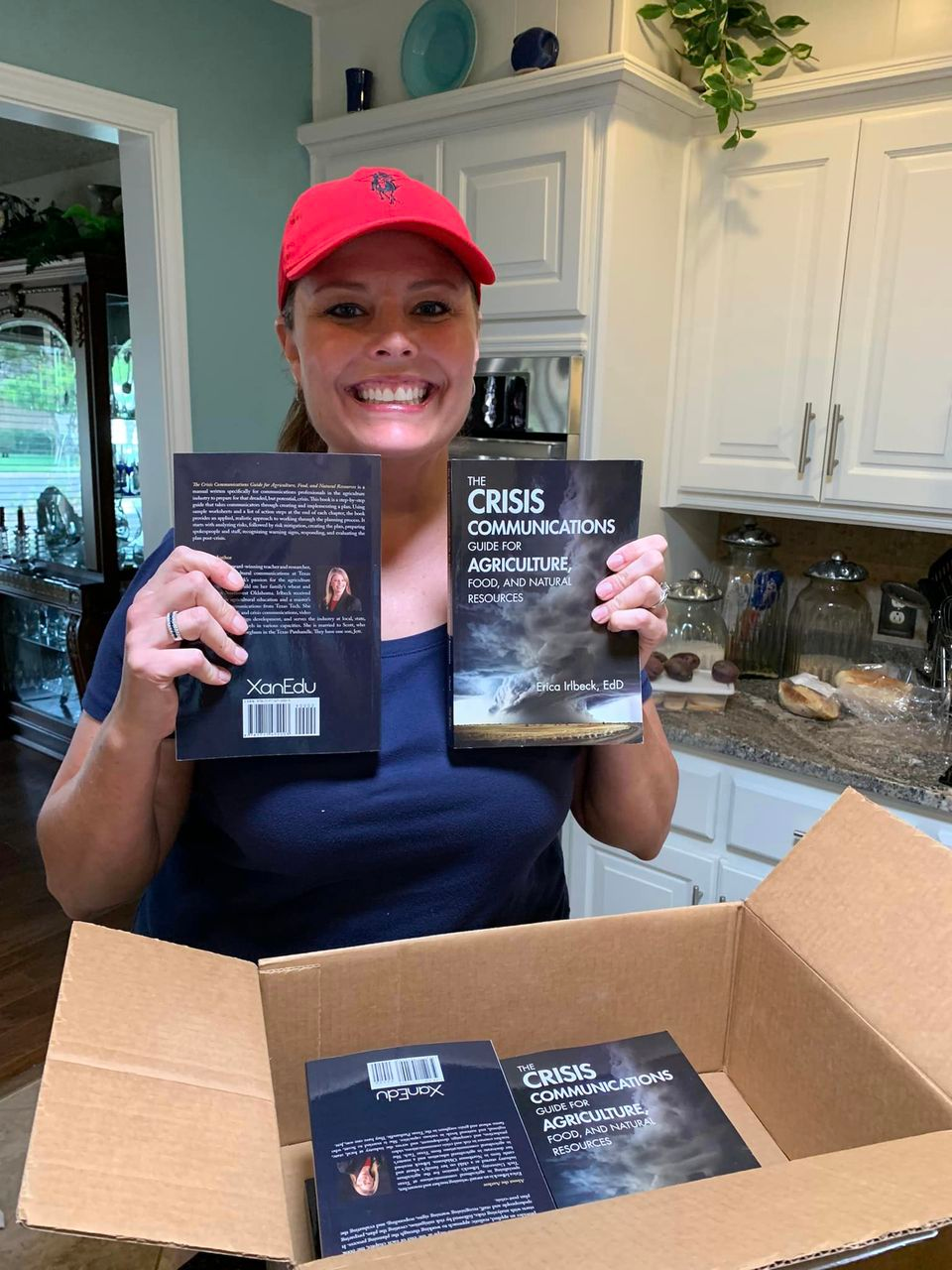
Wrote it, edited it, and I have my very own copy on my desk. This has been one of the most challenging and rewarding chapters (get it?) in my career. I have loved the process and have plans for more books someday, including a novel that is complete, but not published.
The book is called The Crisis Communications Guide for Agriculture, Food, & Natural Resources. I won’t go into the story of how the book came about. It’s in the introduction and acknowledgements of the book. Also, I talked about it a lot in my podcast, which can be found at the end of this post.
When I tell people about the book, I often get “I want to write a book,” or “my life is so bizarre, I should write a book.” I’m here to tell you, you should! And here are my words of encouragement.
Getting Started
Before you start writing, have a topic. If it’s a novel, think of the story you want to tell. If it’s a textbook, think about the research you have amassed that would contribute to a certain group of students. Your audience does not have to be large. I teach a niche subject: agricultural communications. Think regular mass communications with a focus in agriculture/natural resources. It’s very specific and scientific. My book is even more focused than ag communications: it’s risk and crisis communications in agriculture, an extremely specialized style of communicating with a targeted industry of communicators.
I was 44 years old before I felt ready to write this content into a book form. Before that, a textbook was not a goal of mine. So, my first tip is don’t force a book. You need to be ready to write it. And even if you’re ready, do some checking to make sure no one else has written on this topic. There are dozens of books on risk and crisis communications, but none specifically focus on the ag industry, so that’s why I felt like it would be okay to move forward with my idea.
The Writing Process
Starting to write was difficult. I didn’t know where to start. I feel like I stared at a blank Word document for at least six hours trying to think about it. When that happens, schedule interviews. Dig through previous research. Look at other books. Pull information together.
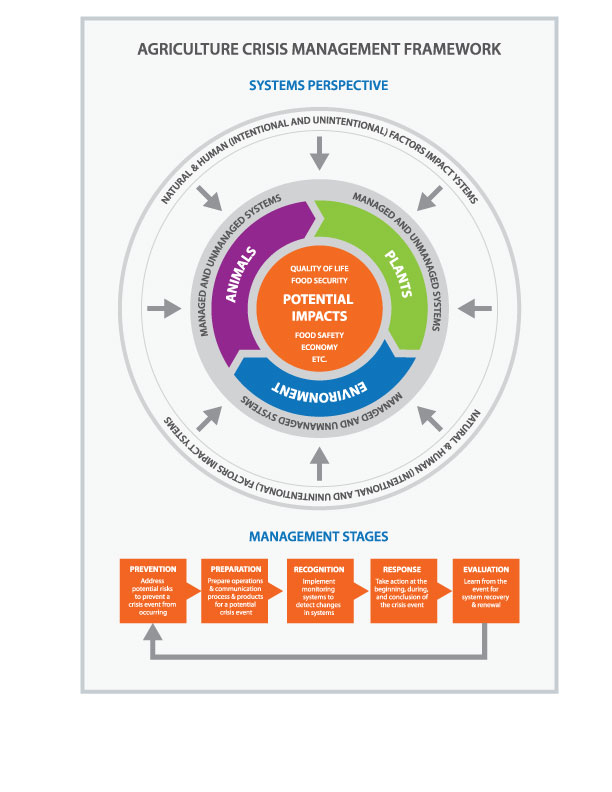
When I teach the risk and crisis communications in agriculture class, we heavily focus on the Agriculture Crisis Management Framework, created by David Doerfert. As I was pulling images and other materials together for the book, I opened that document, and there were the sections for my book: prevention, preparation, recognition, response, evaluation. I added a section called “for the media.” Again, the right approach came to me, so find other things to work on while you’re trying to find the right flow for your book.
I was fortunate enough to apply for and receive a faculty development leave grant from Texas Tech. This is also known as a sabbatical, and I did it in Fall 2021 with the full intention of finishing the whole text – that ended up being such an unrealistic goal for myself. The structure and most of the elements for the chapters were there, but it wasn’t finished at the end of my semester-long sabbatical. I felt like such a foolish failure. I want to go back and have a conversation with the August 2021 version of myself who had no idea what she was doing. A book takes a long time to write, certainly longer than four months. So, in December 2021, I revised my goal to have the book ready to market in the next 12 months.
I owe a great deal of credit to the Texas Tech Faculty Writing Program. It’s a program for faculty to get together at a designated time each week and spend three hours writing for academic purposes: no email, no class prep, no grocery list making, just writing. In my three-hour weekly increments, I finished the manuscript.
Writing and Organizing
This is a personal preference. Here are some ideas I toyed with to keep me organized:
- One big Word document. I did this for the novel I wrote, so I knew better when I started the textbook. My textbook is 300 pages. Can you imagine scrolling 300 pages to fix one error? I don’t recommend.
- Book writing software. There are several options, but basically, these apps are word processing software made for writers. They’re super helpful, and allow you to organize your notes, outlines, citations, and other elements. Scrivener was recommended to me by a friend, and I hear rave reviews; Grammarly is well loved; Final Draft and Storyist are two other options, but I don’t know much about them.
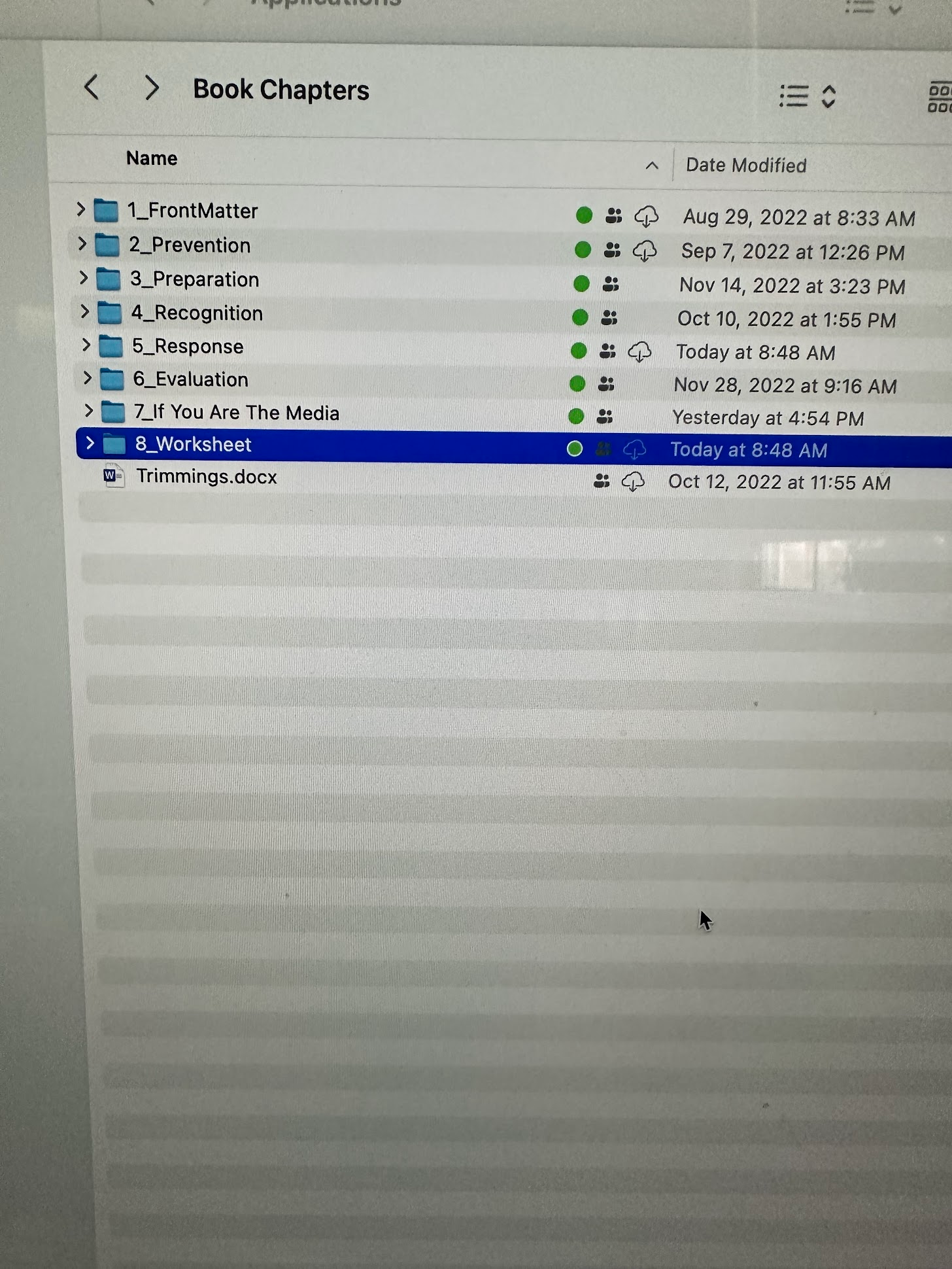
- Word + good file management. This is the strategy I adopted after visiting with several people in the Faculty Writing Program. It’s very easy to spend a lot of your own money on a book (and I have), and this was one area where I chose to save. I created a word document for every chapter, then had my book units inside one folder. See the photo I took after finishing the initial manuscript for a visual. The printed version of the book looks slightly different. Some chapters got combined, one was added, some were cut completely. On occasion, I couldn’t find information that I knew I had written, which was annoying, but the Mac search tool is pretty good, and eventually I found what I knew I had.
Again, the way you organize is up to you, but do organize somehow. Another tip: keep permission forms for using quotes and/or images. I did an okay job of this, but there were a few forms I never could track down prior to publication. If I didn’t have a form, I deleted the direct quote or image from the book.
Another point of organization is keeping track of interview transcripts, names, and permission forms. If I interviewed you for this book, THANK YOU. If I cited you a lot, you’ll be getting a copy.
Finding a Publisher

Any time is a good time to find a publisher. In the podcast, you’ll hear my friends at XanEdu saying the same thing. Some publishers want a manuscript in the idea phase, others want it finished. Start any time; I started in January 2023.
When I had finished my manuscript, I posted the screenshot of my photos to Facebook, LinkedIn, Twitter (or whatever its name is), and Instagram. LinkedIn for the win! A colleague at another university tagged a friend of hers that works for a book publisher. I emailed the person, and we talked. That publisher didn’t print in higher ed, but she was so nice to run the list of publishers that had great sales in agriculture and forestry. XanEdu Publishing caught my eye from that list. I emailed them because they had a fun name. I submitted queries to several other publishers, I sent info to some of them, but I liked the personality of the people at XanEdu from the beginning. They were so personable, and we clicked. Finding a publisher is a lot like dating.
Working with the Publisher
Once we moved into more serious talking, XanEdu wanted the complete manuscript. I edited and did some major revisions at that point and turned it in on May 1, 2023. They had it professionally edited, and once I had those, it took me several more weeks to make those corrections. About this: check your ego when it comes to an editor. You hire an editor for a reason, and their job is to make your book better, so let them. Some of those edits felt personal, but they weren’t. I never met the editor, so it couldn’t be personal. I took as much time as I could to make the changes, then submitted.
The next step was page layout. When the book was designed, I received another copy to proof. This is where paranoia sets in. I found so many more mistakes! It was terrifying to know more mistakes could be out there.
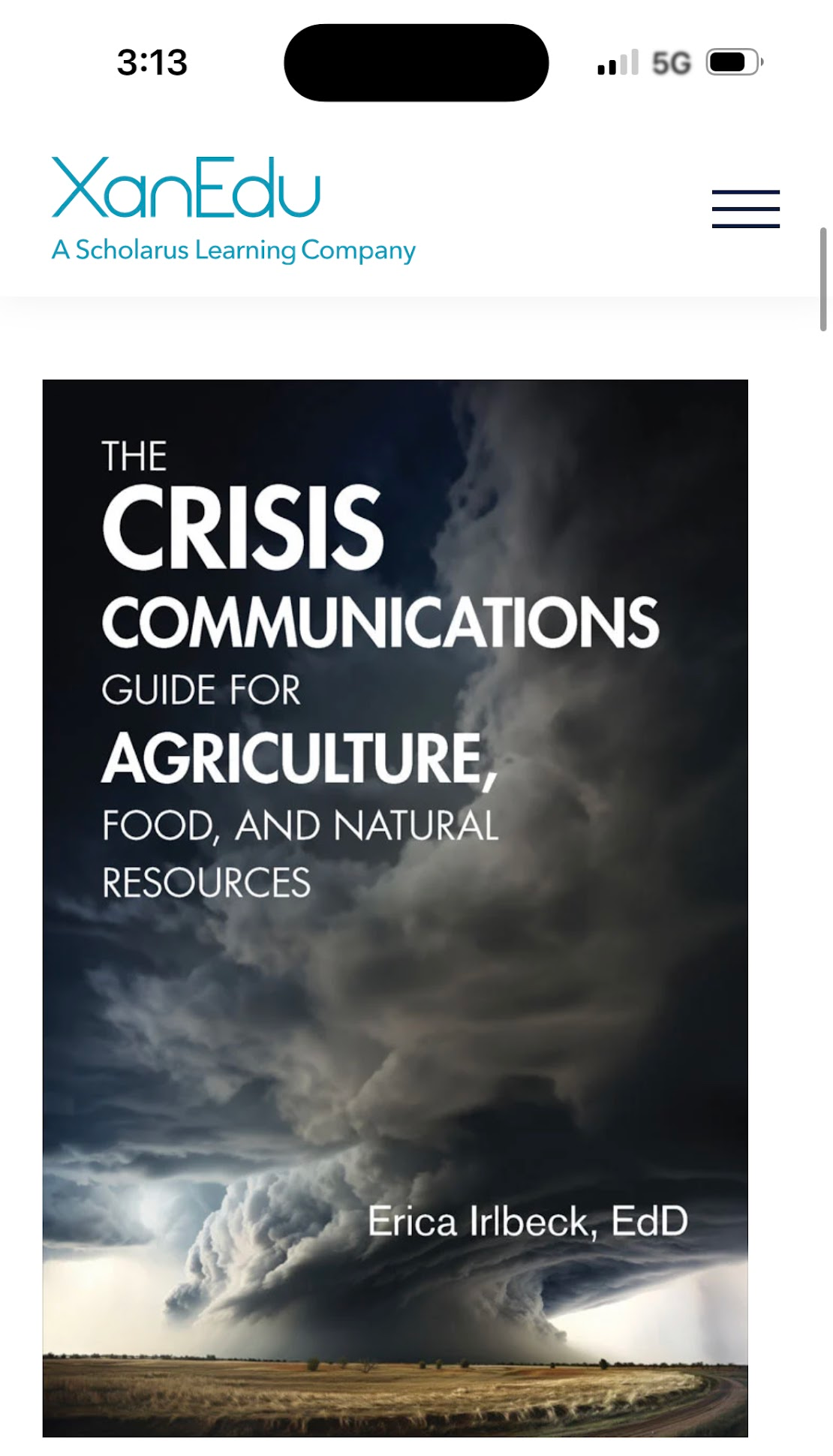
I got one final look at the manuscript (found five more mistakes), then to the printer it went. In the middle of all the edits, we worked on the cover. I think it looks pretty cool. The Texas Tech Bookstore had their copies days before the semester started; my copies arrived on my front step. It was sheer joy to open that box and see my work inside.
Now that I have finished this, I feel like I am dripping with wisdom. So here are my additional points I wanted to say to myself and everyone else.
- The book will never be perfect. Although I did not find a typo on first look, they’re probably there.
- If you have purchased this book, please forgive me for any typos or grammar, spelling, punctuation errors. I did not carelessly create the book, but with 300 pages, there is bound to be a mistake.
- Some chapters are too short, and more information is needed. I plan to gather all the mistakes I have made and create a second edition. I could probably even use a guest author for a few of the chapters, but that will come later.
- I am giving myself grace and forgiveness for the mistakes in this book. It is very easy to see what’s wrong, or how I could have done it better, or how I could have worked harder. However, if I would have focused on the negatives, the book would still be in the editing phase.
- There’s a sweet spot between “the book still needs work” and “publish the damn thing.” Ben and Mandy at XanEdu were wonderful in helping me realize it was time to quit picking at the text and publish. And yes, I could still be fussing over the book and making improvements, but those improvements would have been so small that it probably would not have made a big difference.
- I make $5 per book sold. I didn’t write the book for the money. I wanted to get the information swimming in my head out onto paper; I wanted my students to have a text that was relevant to the ag industry; and a book is something that I have wanted to do since I was a kid. Also, the book company only sent me a handful of copies, so I really don’t have many copies in my possession to give away.
- Don’t listen to haters. I have lived in paranoia for about a year now about the places people will poke holes in my book, the typos they’ll find, the comments about how they could do it better. If you are one of those haters, then please write a better book, and I don’t say that with (very much) sarcasm. I know someone else could do this book in a better way but guess what – I got it done. The landscape is wide open for more books, so stop talking and start writing.
Publishing a textbook is very different from a novel, but the writing process can be similar. Find that topic, dedicate time, and let those fingers fly all over the keyboard. And in case you didn’t get it, here again is the link to purchase the book.
 Erica irlbeck