With affordable video production equipment that now fits into pocket, everyone has the ability to produce videos.
Note, I said videos. I didn’t say anything about a professional video. Yes, anyone can make a video, but here are a few tips that will take a video up a few levels.
Rule #1.
Use the tripod.

This is a situation where it’s okay to not use a tripod. When there are big crowds, moving subjects, and quick action, the tripod may be more of a burden.
You may think your shots are steady, but they’re not. Even with the great image stabilizers that are on smart phones now, we can still see some camera movement. I’m not saying that you must have sticks under the camera for every single shot. Sometimes a tripod is just not an option due to the location or situation. Sometimes you want a moving shot to demonstrate intensity or movement – even in a high quality, professional video. But the majority of the time, use a tripod or something else to stabilize the camera. It can be a desk, tailgate, fence post, the ground, anything that’s stable. For suggestions for smart phone equipment, including image stabilization, see this post.
Rule #2.
Use a microphone, and not the one built into the camera. This is only if you’re going to shoot interviews though. I can tell within a second or two of an interview if the camera mic or an external mic was used. Nine times out of ten, the camera mic makes the interview sound like it was shot in a bathroom. The mic picks up the air conditioner and other room noise and it sounds terrible. After you purchase the camera and tripod, if you want to produce professional-looking videos, a microphone would be my next purchase, even if you’re using a smart phone. For microphone suggestions, see my earlier post.
Rule #3
Look and listen around the scene. What do you see and hear that can spoil your shot?

I have used this before and will continue using it because it’s so funny! Former Alaska Governor Sarah Palin was at a turkey farm and they were processing the turkeys behind her. 🙂 🙂
Are there kids in the background acting like goofballs? Are you close to a highway with noisy trucks driving by once a minute? Are there animals in the background that are in the “family way”? (This has happened to me!) Is the sun/shade combination casting weird shadows on the interview subject? If you see any of these things, change your location.
To turn this around, also be looking for things that are visually appealing, Where do you see great action that can help tell the story? Are there vibrant colors that would make a nice shot? Any cool natural sound? Sometimes that truck that ruins your interview can provide wonderful natural sound. Is there any emotion that you could capture with the camera? These small details can make a huge difference for the overall interest and quality of the finished product.
Rule #4.
White balance. Most cameras now have an automatic white balance function, but don’t rely on it. Take the extra 20 seconds to white balance. Check your camera’s manual to learn how to do this on your specific camera. This step will make the color of your video more accurate.
Rule #5.
Set your shot, hit record, and don’t touch the camera for 10 seconds. We’re all going to shoot zooms, pans, and tilts, but most of the time, those set, steady shots will give you the result you’re looking for. Plus it’s so much easier for you to edit when the shot is steady and you’re not jacking with it!
Rule #6.
MOVE! Move the camera, move yourself, move the tripod legs up and down – just don’tstand still. A lazy videographer is not going to get the shots he or she will need. Let’s say we’re doing a video about a dairy and we’re in the milking parlor. Stand in a corner and shoot a wide, establishing shot so the viewer knows what we’re seeing. Now go to the opposite corner and shoot a 10 second shot. Now get up close to the udders to watch the milk pumping into the tubes. Get a close up of the cow’s face. Get a medium shot of the employees working. All of these shots require you to MOVE. Although it’s fine to use the camera’s zoom lens to adjust your shot angle, if you need a shot of something close, physically move the camera. As you can tell, lazy videography is one thing that really annoys me, especially if I’m the person that’s doing the editing.
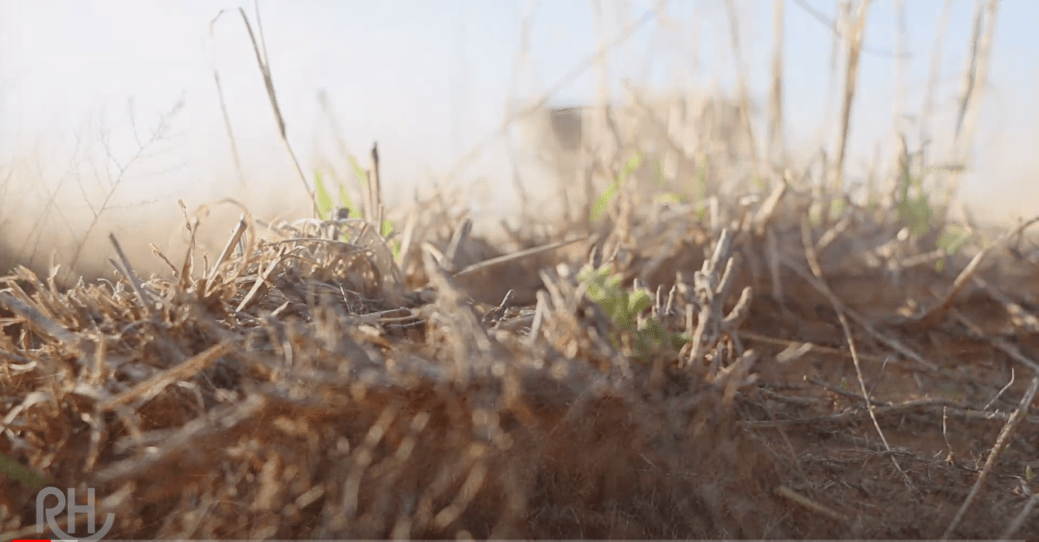
I have always loved how this shot turned out. We were doing a video about drought, and I wanted to see the tiny green grass coming through. The ground was my tripod and the camera was right in the middle of the grass.
Rule #7.
Shoot until you think you’re finished, then shoot 10 more shots. I have never ever said “I shot way too much video. I can’t use all this.” It’s a good day when I shot just enough. For a professional video, you will need much more b-roll than you think. It never hurts to get extra, but it can ruin your video if you don’t have enough.
Rule #8.
Make sure your clothing will not prevent you from getting the shot. Are you going to be out in wheat stubble? Wear jeans so you don’t cut up your legs. Shooting in the swampy heat of Belize? Wear a cotton t-shirt, shorts, and pull your hair back so that you don’t overheat. Shooting a feedlot in January at sunrise? Invest in warm shoes, gloves, and coats. Interviewing the secretary of agriculture? Dress professionally so that you don’t look sloppy going into a government building.
I have many times heard a videographer say that he/she stopped shooting because it was just too hot/cold. If someone is paying you to shoot video, they’re not going to be too happy that you didn’t do what you were hired to do simply because you got hot/cold. Sometimes you only have one chance to get the shot you need. Don’t make yourself look dumb because you weren’t dressed right. This is a good way to lose future business.
Rule #9.
This is more of a guideline than a firm rule, but try your best to shoot early in the morning or late in the evening. The light is much prettier and less harsh at that time of day. Your interview subjects won’t be blinded by the light at these times. Plus light during the golden hour makes a person face look really nice. If you are traveling and are not certain when sunrise and sunset will be, use this website: timeanddate.com
Sometimes you have to break the rules, but for the most part, know the rules and follow them. Then, have a reason to break the rules for a cool look or effect. Everyone expects to see video these days, and it’s fairly easy to do now. Take your videos up a level by implementing these guidelines.
 Erica irlbeck