In my last post, I was very encouraging to participate in media interviews. The media has a responsibility to disseminate information, so they will find someone to interview, and it may be someone that does not have your knowledge. If you have expertise on the topic, be willing to help them understand.
A Reporter Called. Now What?
First, don’t be ambushed. And by ambushed, I don’t mean that a reporter is going to jump out of the bushes with a camera rolling and a microphone in your face. That only happens in the movies and maybe politics (but probably not). It does mean that a reporter may call and want you to do a phone interview right then. Or a t.v. reporter may show up at your office or farm and want to talk. All you have to say is “I’m not available at this moment, but I do want to talk to you. Can you give me 30 minutes (or longer) to finish what I’m doing? In the meantime, will you tell me or email me the questions you plan to ask?” They’ll work with you. Or if you truly are unavailable, offer to help the reporter find an interview source. Again, they’ll find someone. Help them find someone that is well spoken and knows what they’re talking about.
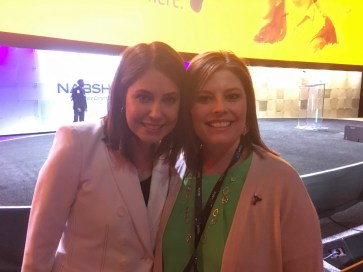
I’ve never been interviewed by Cecelia Vega, or any national media for that matter. But I have my pic with her, so I’m including it because I think it’s cool.
Preparing for Questions
Ask the reporter what questions he or she will ask so that you can prepare. When you have them, develop a set of talking points. Have two or three points you want to make in the interview and keep repeating those points as the questions are being asked (but don’t be obnoxious about it). Practice answering the questions with someone you trust. You need to find someone who will be honest with you and will help you improve on the way you answer your questions.
I deal mostly in agricultural and science communications, and the typical general assignments reporter may not know much about the industry. It’s okay to educate them and help them understand before the camera or recorder is rolling.
If you don’t know the answer, don’t speculate. My students often say, “fake it till you make it.” Don’t do that when you’re talking to a reporter. Be honest, tell the reporter you don’t know, and offer to find the answer. Also, there is no such thing as “off the record.” If you don’t want something aired or printed, don’t say it to a reporter.
The Look
These are suggestions for on-camera interviews more so than print interviews.
Clean, solid-colored shirts tend to look best on camera. Run a brush through your hair. If you must wear a cap, make sure it’s clean; but know they may ask you to remove the hat as it can create a shadow over your eyes and make you look like you do not have eyes. Ladies, even if you don’t normally wear makeup, a little blush and lipstick will give your face some color and you’ll be happier with the way you look.
In general, avoid solid white on camera. It can wash out your face. Busy prints can look odd, and they can make you look heavier. I don’t like seeing my bare arms on camera. I’m not exactly ripped, and the few times that I have worn a sleeveless shirt, I haven’t been happy with the way my arms look. Finally, if you’re wearing sunglasses, the videographer may ask you to remove them so we can see your eyes. If the sun is right in your face and you’re not comfortable, ask if you can put them back on.
The Act
 Stand still! Try your best not to rock or sway. If you’re sitting in a swivel chair, do your best to not rock. Keep your hands at your sides, but if you tend to talk with your hands, that’s okay. Look at the reporter; ignore the camera. It’s easier said than done, but at the end of the day, you’re just having a conversation with another person. Don’t let the camera make you nervous. Speak up and speak clearly so the microphone can pick you up. Speak in complete sentences. In my previous post, I noted that people often get upset about their interview getting cut down. I know it can be frustrating, but they have to cut the interview down for time and space constraints. So, speak in complete sentences so that it is easier to select your quotes. This gets easier if you practice before (see the previous paragraph).
They May Need
In most situations, the reporter will let you select the location to conduct the interview. When possible, select a spot that is quiet with minimal distractions. For a television interview they like to conduct the interview where you work. So, if you conduct research in a greenhouse, they’ll want to be in the greenhouse. If you are a lab scientist, they’ll want to be in a lab. If you farm, they’ll want to be in a field. This is a generalization – weather and other factors can dictate where the interview will take place. They may set up lights that will require electricity or move things around to make the background look better.
Both print and television reporters will probably need photos and/or video (it’s called b-roll in the biz). Be willing to help them. Drive them around and show them something that’s visually compelling. Help them think of video or photos they should shoot.
When It’s All Over
If the reporter did a good job, tell him or her! The news business is a thankless one, so encouragement goes a loooong way. This can also play in your favor, because the next time a reporter needs a source, they’ll remember that you were nice, and they’ll call you again, which means you’ll get another chance to promote your industry or business.
I know it can be a hassle to be interviewed, and yes, it takes your valuable time. On occasion, the reporter could get it wrong. But think of the time you spend with a reporter as an investment in marketing your business or industry. I can’t preach it enough: reporters will find a source for the story they were assigned. If not you, who? If not now, when?
 Erica irlbeck