I have worked on both sides of the media. I worked in public relations, and I was a television reporter. As a PR person, I often dealt with co-workers that did not want to be interviewed for fear of being misquoted, ambushed, trapped, twisted, or omitted. As a reporter, I made a few mistakes. On occasion I got information confused, a time or two I inadvertently left out information that should have been part of the aired story. My experience working in the media is dated, but I still work with the media quite a bit, and I still see hesitation to be interview in my colleagues that work in agriculture.

Sweet little me, in my publicity shot for AgDay Television, a long time ago.
But here’s a secret. Reporters want to get it right. They don’t want to leave a critical element out of the story. They want their sources to want to be interviewed again.
Let me clarify about reporters before I move on. When I’m talking about reporters, I’m not talking about people like Laura Ingram, Chris Cuomo, Sean Hannity, or Anderson Cooper. Yes, they’re reporters, but realistically, they’re current events talk show hosts that have an hour (or more) of content to fill. They have agendas and biases, and they tend to bring in guests that 1) affirm their opinion or 2) are fun to argue with.
The reporters I’m talking about are the journalists that report on a different topic (usually) every day; my experience is mostly with local reporters. Yesterday they might have written a story about the crashing oil economy, today they’re writing about a lack of rain and the impact on crops, tomorrow they may write a medical story. They have about six hours – if they’re lucky – to turn a story. The newsroom they work in may be loud and stressful. The job is thankless. They’re overworked and underpaid. Public sentiment toward them skews low.
On a daily basis, they are given a story assignment, gather background information, identify potential interview sources, hope the sources will be available for an interview in time to put the story together, and then sort through a plethora of information to tell a story that makes sense.
In telling a story that quickly, reporters sometimes get it wrong – it’s not often – but they’re humans dealing with a lot of information that they may not know much about. Mistakes can happen. It’s frustrating when they get it wrong, but trust me, they’re just as frustrated about the mistake as you are.
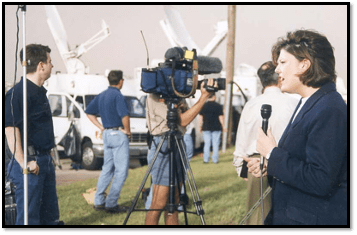
Covering the Moore, Oklahoma tornado in 1999. Turning a story in a sad, high stress situation when you can’t find your way around because the street signs are gone can lead to mistakes.
I regularly hear from colleagues (with an angry tone) something like this: “That reporter talked to me for 20 minutes, and then when I watched the news, they used two sentences.” It’s true. Reporters chop interviews down to fit within the time or space given by management. Because they have limited time, they have to choose which info to use, and which to scrap based on what they think is important. It’s called framing theory, and I did an entire dissertation on it. It goes back to the reporter’s knowledge of the topic, their opinions and ideologies of it, and management’s policies. Are reporters biased? They can be. They’re humans with brains, feelings, and opinions. Sometimes they have preconceived notions of a topic, and you may see some of that in their reporting. I’m 100% guilty of this. For example, I wouldn’t give an animal rights organization, such as PETA or HSUS, the time of day. I look back now and see it wasn’t responsible journalism, but coming from an animal ag background, I didn’t want to give those groups a platform. It’s not right, but It happens.
But here’s the thing. Reporters have a constitutional responsibility and right to disseminate information. They’re going to tell stories, and they’re going to find sources to help them tell that story. If you have expertise on a topic, shouldn’t it be you that’s willing to talk to them? Shouldn’t you be helping them understand a topic? If you decline an interview request, a reporter with a 5 p.m. deadline will move on to someone that will talk to them, and sometimes, the person they find doesn’t have knowledge that you may have.
Don’t miss out on an opportunity to talk about agriculture, science, or your specific industry just because you’re afraid of being misquoted. Someone needs to speak up for your industry, and it might as well be you. In the words of a motivational speaker (probably at some 4H conference) I once heard: “If not you, who? If not now, when?”
But really. If you don’t do it, who will? Be a resource. Help the media understand. Often when someone is misquoted, it’s because the reporter didn’t fully understand the technicalities. Visit with them before the recorder rolls and let them know you want to help them disseminate good information. Speak up for your industry. Let reporters know when they did a good job, and they’ll come back to you for your expertise again. Seriously: If not you, who? If not now, when?
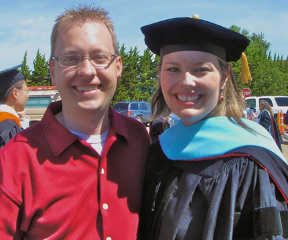
Me and hubby, after writing that dissertation. This really has nothing to do with this blog post, other than I had to look through old pictures for my post and found this one.
 Erica irlbeck